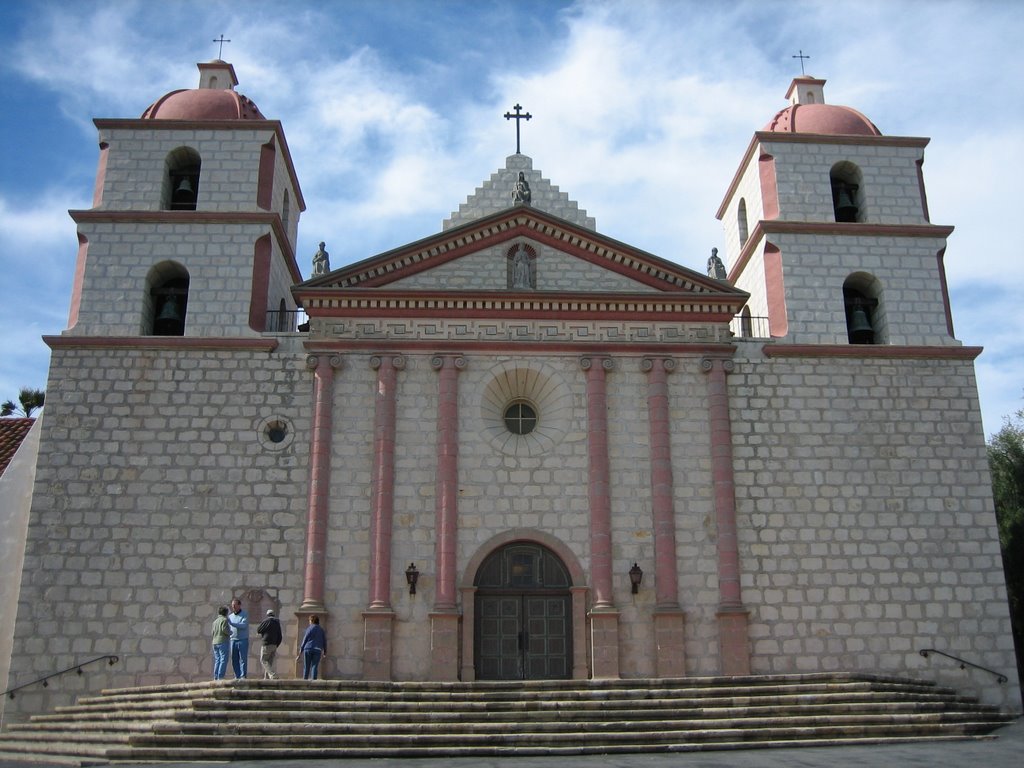
Here's some pics from my recent (spontaneous) trip to California... the sun setting over the beach at Santa Monica and the mission in Santa Barbara, where I used to live. It was about 40 degrees the whole time I was there, but it was still great!


 Wells-Barnett was banned from the South in the late 1800s when she used her journalist credentials to expose lynching. She later became a charter member of the NAACP, female suffragist, and American leader. My favorite Ida anecdote: When NAWSA and the National Woman's Party refused to let Black women march with them in the famous 1919 suffrage parade, Wells did something extremely brave. She and a few other Black suffragists stood at a bend in the road, where the parade could not continue without them. She stepped in the parade and marched with the others until the end.
 female Ghandi." She first became involved in the Civil Rights movement through SNCC in voter registration after attempting to vote, in her 40s, for the first time. Her accomplishments are limitless, including food and clothing drives, running for senator, organizing projects to help poor, rural African Americans, and encouraging womens' involvement in Civil Rights. What I find most inspiring about Hamer is her drive, her desire to secure freedoms and respect at a later point in life, her sheer courage to defy her position.

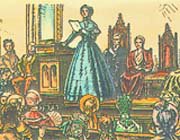
The women’s rights movement came in waves in the U.S., starting in full swing in the 1840s. Building on their platform as abolitionists, women spoke publicly about the need for women’s rights and held the Seneca Falls Convention in NY in 1848. The women and men present at this conference (organized by Susan B. Anthony and Elizabeth Cady Stanton) signed the Declaration of Sentiments , modeled after the Declaration of Independence, detailing specific rights they felt that women deserved.
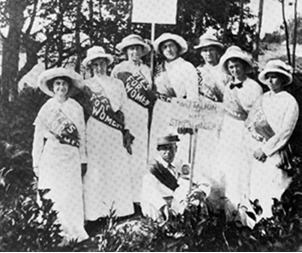 It wasn’t until 1920 that women received the right to vote, after a long and sometimes violent battle. Since the inception of the United States, female citizens voiced their desire to speak their minds through the ballot (for example, First Lady Abigail Adams, who wrote to her husband reminding him to “remember the ladies”). Women donned the popular “Votes for Women” banners, consistently pestered the government, and educated the public on the need for women’s suffrage. “Forward out of darkness, forward into light,” goes the slogan of the National American Women’s Suffrage Association (NAWSA), and it paid off.
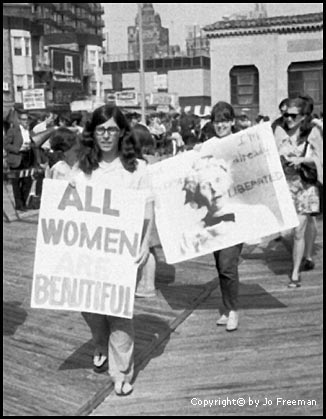
Jump ahead to the 1960s and 1970s when the women’s movement took the country by storm. Male-bashing, sexual liberation, anti-discrimination, workers, political, and reproductive rights along with organizations such as NOW took center stage. Crazy protests such as crowning a sheep Miss America in 1969 terrified the general public. Most women were lumped into one of two categories: the submissive housewife or the radical feminist. Feminists of the ‘60s and ‘70s pushed for legislation to ensure their equal rights and openly displayed their cause.
Check out Sara Evans' Born for Liberty for a good overview of U.S. women's history. Also, the LOC has a pretty good timeline of women's history in America.
Stay tuned for a discussion of how this history has contributed to what feminism is today…